



Spindle Thermal Stability Is Becoming a Key Concern for Machine Tool Users
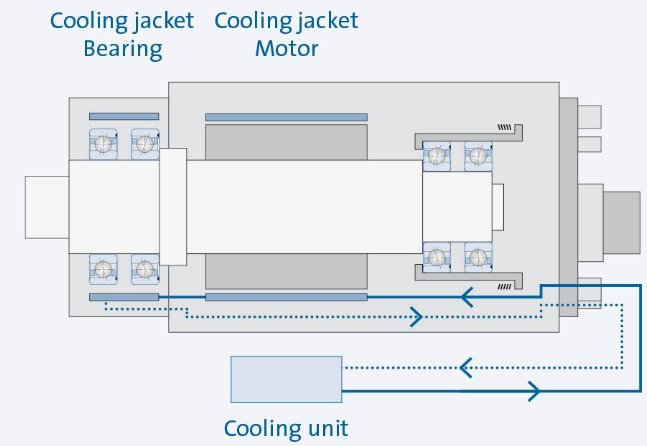
As machining requirements continue to improve, customers are looking beyond basic specifications such as spindle speed and motor power when selecting machine tools.
One factor that is receiving more attention is spindle thermal stability.
During continuous machining, heat is generated inside the spindle due to bearing friction, motor operation, and cutting loads. As the temperature rises, the spindle components expand slightly, which can affect the relative position between the cutting tool and the workpiece.
Although the thermal displacement may only be a few microns, it can have a noticeable impact on precision machining.
How Does Spindle Temperature Affect Machining Accuracy?
The spindle is one of the most important components of a machine tool. Its stability directly affects:
Dimensional accuracy
Surface finish
Roundness
Machining consistency
For example, when a machine starts running, the spindle temperature is relatively low. After several hours of continuous operation, the temperature gradually increases and reaches a stable condition.
If the thermal deformation is not properly controlled, the machining size may gradually change during production.
This is especially important for manufacturers producing precision parts with long machining cycles.
How Do Machine Builders Improve Spindle Thermal Stability?
Machine tool manufacturers use different methods to reduce the influence of heat on machining accuracy.
1. Precision spindle bearings
High-quality bearings with proper preload help reduce friction and maintain stable spindle rotation.
2. Optimized lubrication systems
A suitable lubrication system helps control heat generation and improves bearing service life.
3. Spindle cooling systems
Some high-precision machines are equipped with oil cooling systems to maintain stable spindle temperature during long-term operation.
4. Improved machine structure
A rigid and well-designed machine structure helps reduce the impact of thermal expansion and improves overall stability.
Why Should Customers Care About This?
For workshops that only run machines occasionally, thermal stability may not be a major concern.
However, for factories operating CNC machines continuously, even small dimensional changes can lead to:
Increased scrap rates
Frequent machine adjustments
Reduced production efficiency
Therefore, when choosing a machine tool, customers should not only check the initial accuracy inspection report but also consider how well the machine can maintain accuracy during long-term operation.
A good machine tool should not only achieve high accuracy when it leaves the factory, but also maintain stable performance after years of production.
Post time: Jul-24-2026